
Why LinkedIn Sucks
The Problem with LinkedIn and a Golden Chance for it

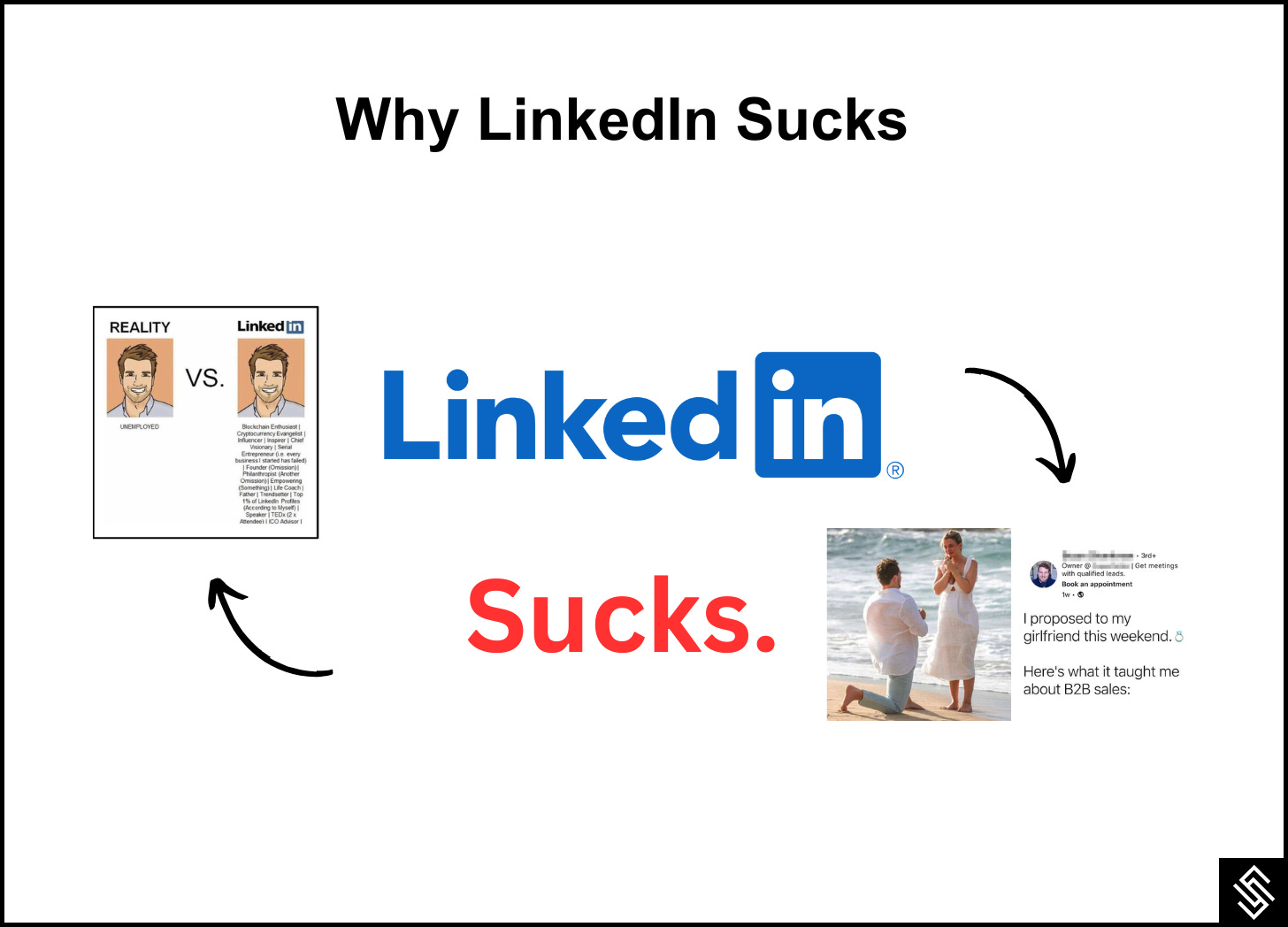
If I distinctly remember, I used LinkedIn only once for two short months in 2022. And since then, it’s a platform I couldn’t care less about. Needless to say, I keep a dummy account in case I need to spy on someone or check LinkedIn profiles of internet weirdos.
I once came across a controversial yet powerful career advice someone gave, which worked as a confirmation bias and boosted my confidence to stay away from LinkedIn. And ever since, I get this feeling that I’ve been criticizing the platform more and more lol.
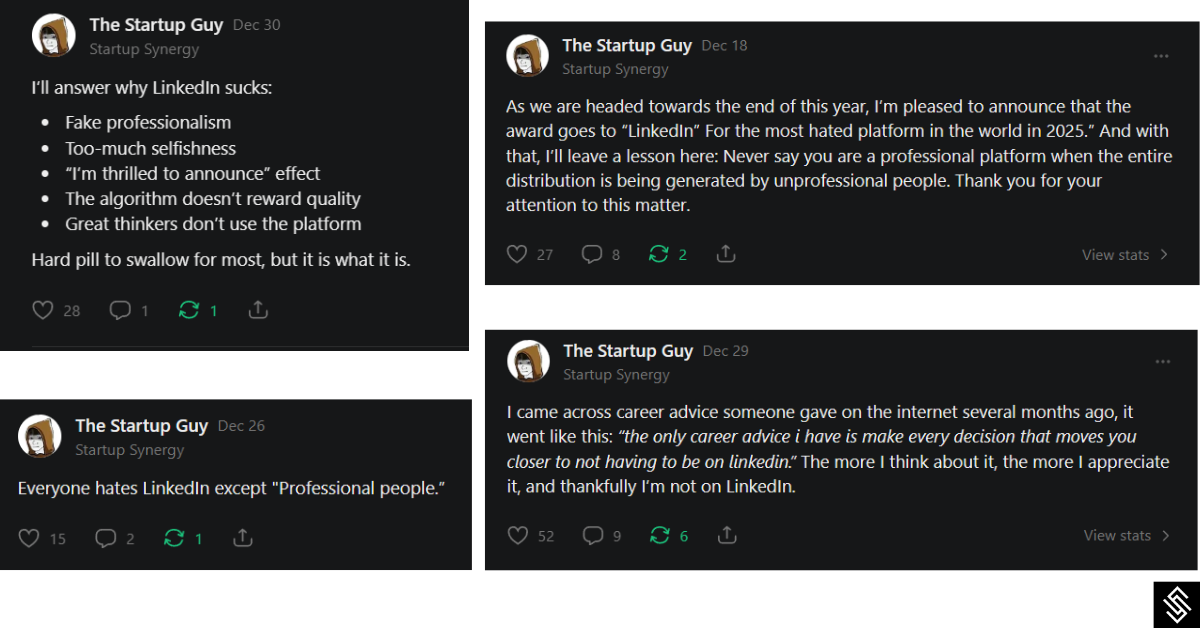
I’d feel stupid doing this for no clear reason. But if you Google, “The cringiest platform,” it turns out that LinkedIn is the cringiest platform on the internet. I don’t always agree with Google, but I do agree with this one.
And you’d be surprised to know there’s a famous Subreddit called “LinkedIn Lunatics” where people share the cringiest, dumbest LinkedIn posts. And I know a whole bunch of people who absolutely hate LinkedIn. Twitter by far, in my experience, has the most users who can’t stand LinkedIn.
Why is that? LinkedIn’s got problems.
LinkedIn’s got some serious problems. The problems are so worse they’ve created a bad brand identity and put LinkedIn in a position that’s helpful practically to no one. But interestingly, on the flip side, LinkedIn has become a monster business to Microsoft, generating tens of billions of dollars every year, and it indeed has had the potential to become the next big thing.
Hold on! Can we explore these? I think we should.
I don’t want to keep criticizing LinkedIn throughout the post, explaining all the problems it has. I’m not a pessimist. So, I will aim to help you understand LinkedIn as a whole, walking you through the platform’s problems, the platform's evolution, its monster business, and LinkedIn’s opportunity to become the next powerful professional networking platform.
Let’s roll.
The Identity Problem
LinkedIn has a bad brand identity problem.
I’m not talking about LinkedIn’s identity/ID verification, what I’m talking about is LinkedIn’s brand identity. A brand identity AKA image is how people perceive and see a company, and it’s the reason people use or stay away from a platform. My bet is that every single popular platform has a brand identity attached to the company’s product.
WhatsApp? Personal chat app. Instagram? A platform for flex. Twitter? Toxic & hateful. TikTok? Ruined society. Substack? The modern library. LinkedIn? Cringe as hell, everything’s fake. Did I get all of them right or just the last one? The point is, LinkedIn’s brand identity is its cringeness and fakeness. And professionals are forced to use the platform, not because they want to, but because they have to.
You don’t have to believe me, listen to Forbes:
LinkedIn’s real-identity network should be its greatest strength. Instead, it became its crutch. With no meaningful competition and near-total dominance over the professional graph, LinkedIn never faced the pressure to innovate. Professionals stayed because they had to, not because they wanted to.
So why is it the way it is? A few key reasons:
#1: Personality
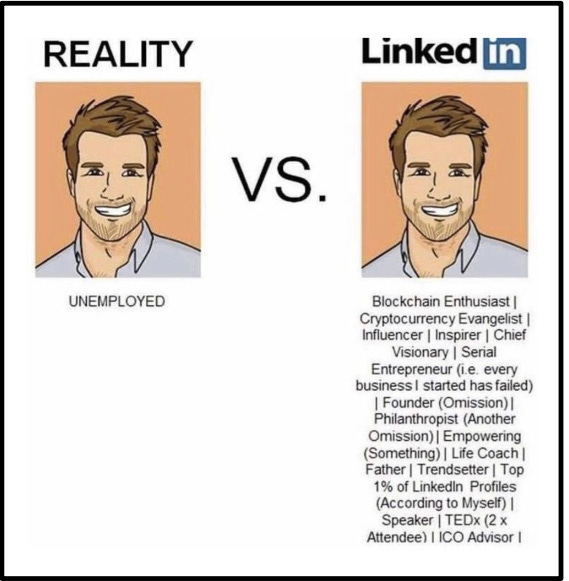
I don’t know when this became the norm but most people on LinkedIn try to be smart, clever, and impress others. But as you may know, from a human psychological standpoint, the smarter you try to be, the dumber you look; and the more you try to impress others, the less impressive you become. Sadly, I think LinkedIn’s professionals don’t know this phenomenon.
I’ll take a simple example of their LinkedIn bios:
#2: Fake professionalism
It’d be unfair to say that everything, everything is fake on LinkedIn. But it’s also true that since a large number of people “fake” things on the platform, it indeed overshadows the genuine ones and the real work of people who don’t.

#3: Doomed Features
Can we say that LinkedIn has some of the worst, nonsense, pointless features? I mean who needs to add a tagline “#OPENTOWORK” to find a job? And who needs Skill Endorsements that no one cares about? The only people who need these are the incompetent ones. But guess what? Incompetent people don’t get hired either way.
My man Greg has a hot take on this:


The Culture problem
Here, things get worse.
But again, I’m not talking about LinkedIn’s internal company culture, what I’m instead talking about is the platform’s culture where the end user lives, breathes, or dies. Some people thrive on LinkedIn’s platform culture, but most simply can’t breathe and die.
I’d be lying if I said the platform’s culture has nothing to do with LinkedIn’s brand identity. Frankly, one of the reasons LinkedIn has a bad brand identity is because of its platform culture. This bad platform culture could be due to its algorithm, content, notifications, and other nonsense acts by LinkedIn.
Here’s why LinkedIn has a culture problem:
#1: The Content
What type of content comes to your mind when you think about LinkedIn? Probably these: Hustle porn, humble brags, lessons from everything, fake announcements, clickbait hooks, performative vulnerability, repetitive self-promoted courses and services.
Walk down the street of any major city in the US, and ask them about LinkedIn’s content. If they aren’t doomed and have scrolled through the platform enough times, they’d tell you how bad it actually is.
You don’t have to believe me, just see what people on Hacker News are saying:
Recently I came to the conclusion that I needed to change jobs, but I held off because I didn’t want to deal with the psychotic ramblings of LinkedIn posters. I’m sure in real life they are all perfectly normal individuals but something about LinkedIn insists that every poorly worded fable is gateway to wisdom, that metaphorical socratic dialog is to mechanism to describe human behaviour, and starting every second post with ‘I’m sure this is a contraversional opinion but hear me out...’ In the end I got fired, so I’m actually forced back into the LinkedIn maelstrom of mediocrity but against my will, and without even the grace of my own grim resignation to spur me into action.
LordN00b
LinkedIn is full of worthless posts full of users wanking each other off. Its the only place full of “get out of bed early, quite drinking soy lattes, inherit wealth” type of posts where it doesn’t get challenged (maybe X is another one). I genuinely might prefer reading AI-generated crap, because then I feel better about humanity.
Aleksjess
Deleted my account years ago, and I’m not surprised LI has become even more of a cesspit. I’ll continue to find meaningful things to spend my time doing by talking with actual humans by email, phone, and in person.
meristohm
They are all right, LinkedIn couldn’t be worse. There’s no room for genuine, insightful content. And even if you do find insightful, genuine content, do you know how it gets structured? They are structured and read like this, which makes a good idea bad:
Click to read more
I know you’ve seen them.
The LinkedIn posts that go like this.
One single line after another.
It starts with a surprising personal story.
An unexpected workplace anecdote.
Struggle and triumph immortalized.
In bizarre business-oriented free verse.
It’s meant to impart an inspirational lesson.
In the end, it delivers some tired cliché.
People are calling it “broetry.” You’ve just read a broem.
The Broetry usually reads like this:
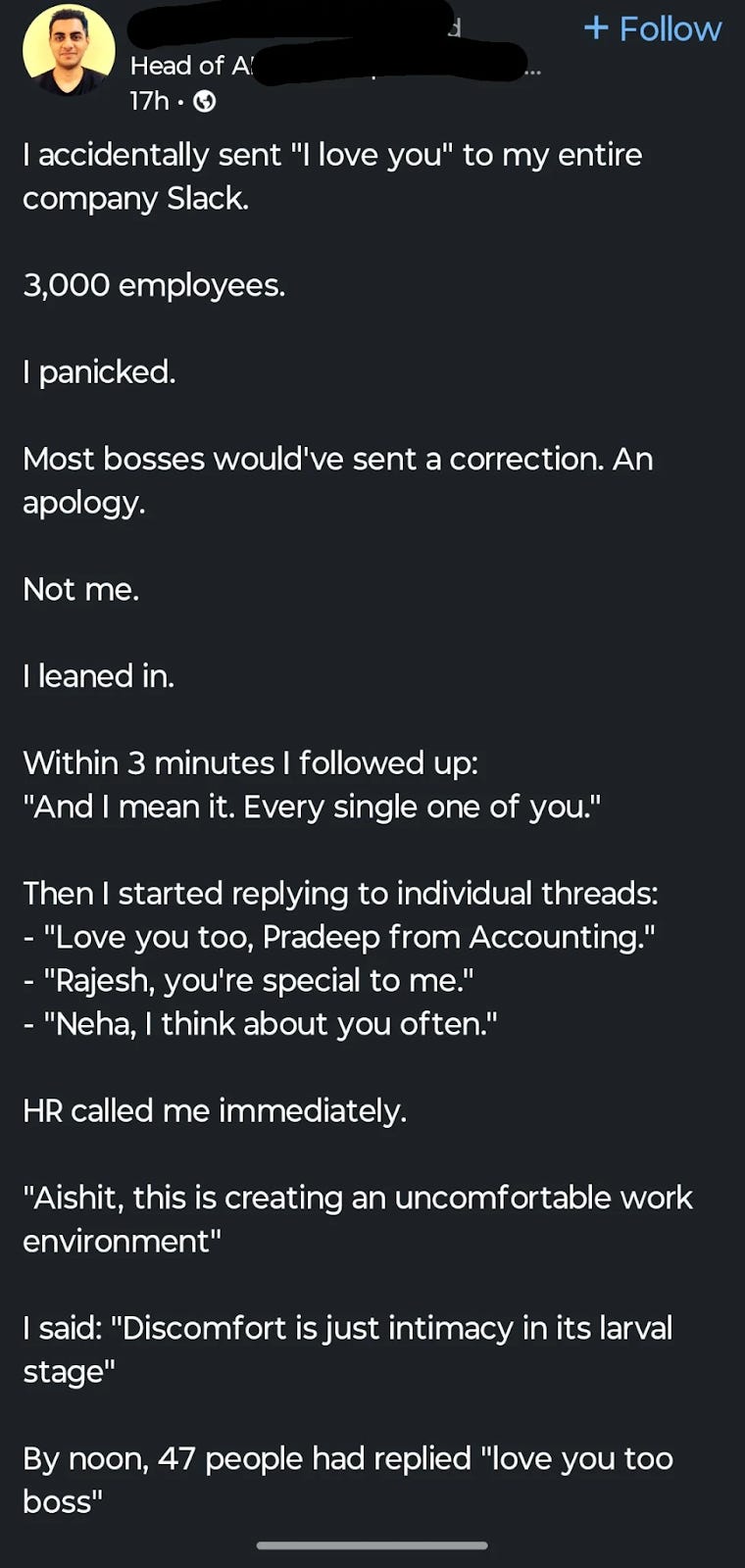
I’m confident to say people on LinkedIn think writing like this is a sure-fire way to get people’s attention. But if you’re anything like me, you know these types of posts are full of crap that do nothing but waste your time.
#2: The Algorithm
Content wouldn’t be a problem if LinkedIn’s algorithm weren’t promoting them. But the reality is far from the truth. The platform is in love with crap, one-liners, cringe content. The more you try to avoid them, the more you tend to come across them.
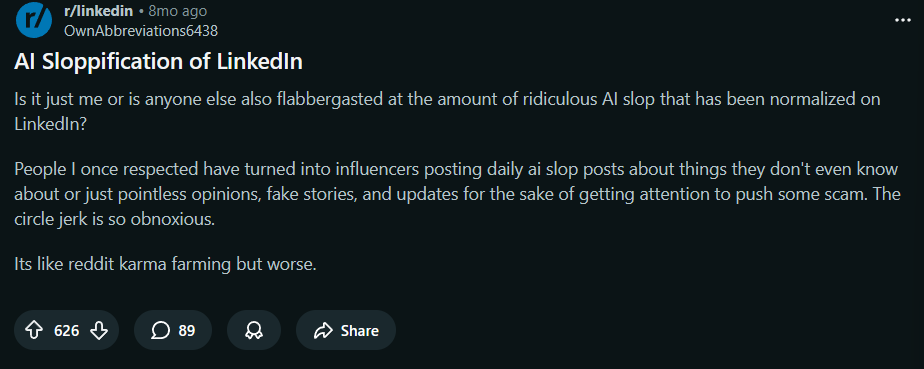
I’ve also heard that there is a new type of problem LinkedIn “Professionals” are encountering: AI-generated content. LinkedIn’s new algorithm update, 360Brew, was supposed to protect its users from the dystopia. But it looks like the algorithm isn’t helping, and rather feeding its people not just the cringiest posts but pure AI-generated content that takes zero effort to create.
Just read this and this Reddit post:
#3: Messages & Notifications
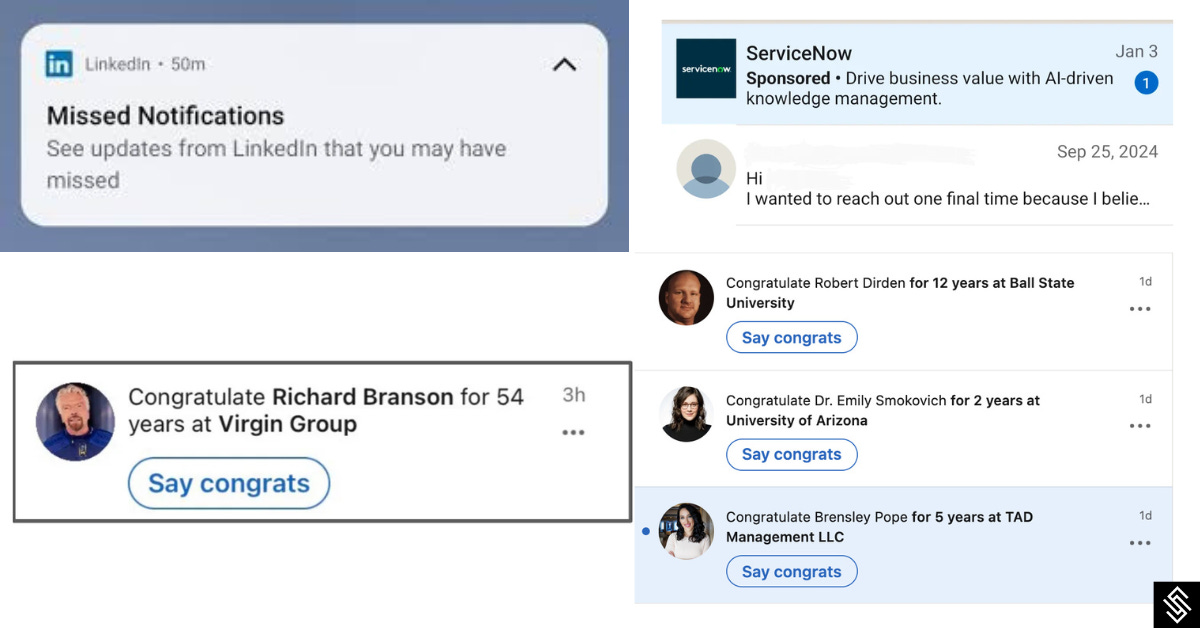
I know you don’t want to congratulate people on their job anniversaries, and I know you don’t want to get sponsored messages from LinkedIn’s weirdos, and I know you don’t want to get that useless notification that says “You appeared 17 times on search last week, find out more.” All nonsense.
Most people on LinkedIn don’t want to engage in such activities. But since they only have so much control over their account, LinkedIn makes the user experience worse by constantly sending them such messages and notifications that they couldn’t care less about.
Nothing is good and important about these messages & notifications.
Was LinkedIn Always Like This?
Knowing all this, you now may wonder and question, “Was LinkedIn always like this?” And the answer I’d tell you is: Well, absolutely not. LinkedIn wasn’t always like this. Actually, LinkedIn’s evolution is pretty interesting.
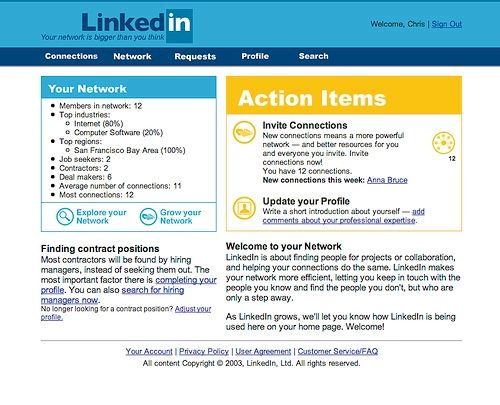
LinkedIn wasn’t started as a social networking platform as it is today. Instead it was more like a job board and a professional resume platform where recruiters and prospects could find their ideal hires and jobs while making connections. There was no social feed, algorithm, or creator tools.
Here’s how LinkedIn actually evolved over the years:
#1: Founding Era
LinkedIn was founded by Reid Hoffman and Eric Ly in 2002 and was officially launched in 2003, with the initial goal to help people and businesses connect with each other, manage resumes, and find opportunities through the platform.
This turned out to be a great idea, resulting in LinkedIn gaining over 1 million users within a year by August 2004. By 2007, that number had grown past 10 million users, LinkedIn going public in 2011, and becoming a success story in Silicon Valley. But it still wasn’t a social media platform it later would become.
This was one of the early versions of LinkedIn:
#2: Social Era
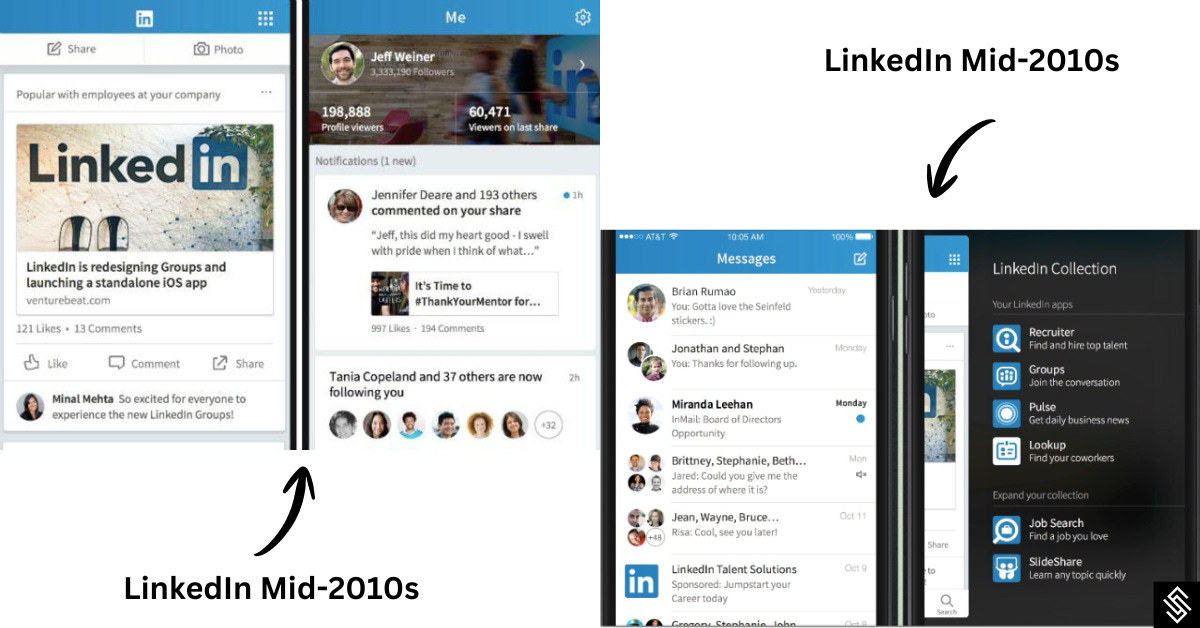
LinkedIn slowly started turning into a social media platform as the 2010s began. They had observed Facebook’s success. So with their initial effort, LinkedIn had already introduced a few social-like features, for example:
LinkedIn Groups
LinkedIn Subscription
Who Checked Your Profile
LinkedIn made the biggest social bet in 2012 when it introduced its Influencer Program, allowing prominent figures and thought leaders like Richard Branson, Arianna Huffington, Jack Welch, and others share their ideas and wisdom on the platform through long-form articles. And with its success, LinkedIn mainstreamed it in 2014 to allow all users publish articles on LinkedIn, making today’s home feed the default tab.
The company later introduced dozens of new creator tools for example video feature, live stream, newsletter, direct messages, and more to help its users succeed on the platform.
#3: Cringe Era
In 2016, Microsoft paid $26.2 billion to acquire LinkedIn.
And it was only when LinkedIn’s AI algorithm and its Content Feed was heavily supercharged, making it the central feature of the platform. However, Microsoft didn’t just make LinkedIn a social networking site, they also integrated it into Microsoft’s deep ecosystem so tightly that its customers benefited like never before for finding opportunities, recruiting, job trends, data, etc.
LinkedIn became an internal tool for Microsoft’s customers.
However, this was also when people using the platform started to see a strange pattern: More cringeness, fakeness, ridiculous thought-leadership content. Worse, the pandemic hit. Thread boys from Twitter headed to LinkedIn, LinkedIn existing users doubled down on their content creation strategy, and a dystopia of humble brags, hustle porn, fake vulnerability, and useless B2B lessons type of content flooded the platform.
By 2021-22, people could sense the platform’s cultural shift and how LinkedIn was turned into a useless platform. The more people started posting, the cringier the platform became, ruining its professional-sense because of the cringeworthy posts. The Snowball Effect. And people started addressing the problem via articles like this, this, and this, and this:
People who liked the cringeness thrived on the platform; people who didn’t, simply quit the platform. But one thing was clear: the cringier the posts, the cringier the platform’s culture became, attracting the fake “professionals” around the world.
Of course the evolution was necessary, and it indeed makes sense to provide users with the creator tools they needed to succeed. But clearly, the incentives for good work were misaligned. As Charlie Munger once famously said, “Show me the incentive and I’ll show you the outcome.” If the algorithm hadn’t favored one-liner nonsense crap, people would’ve stopped creating them.
But Wait…LinkedIn Has Potential
Truth be told: No matter how cringe the platform, LinkedIn is a monster business.
LinkedIn has over 1 billion users globally, impressively 60% of its users are young adults at the age of 24 to 34. Revenue-wise, the company did over $16.4 billion in 2024, and $17.8 billion in 2025 in total revenue, representing a year-over-year growth of around 10%. Now compare this to Twitter, which did around $2.99 billion, and Snapchat, which did around $5.7 billion in total revenue in 2025, LinkedIn looks far ahead.
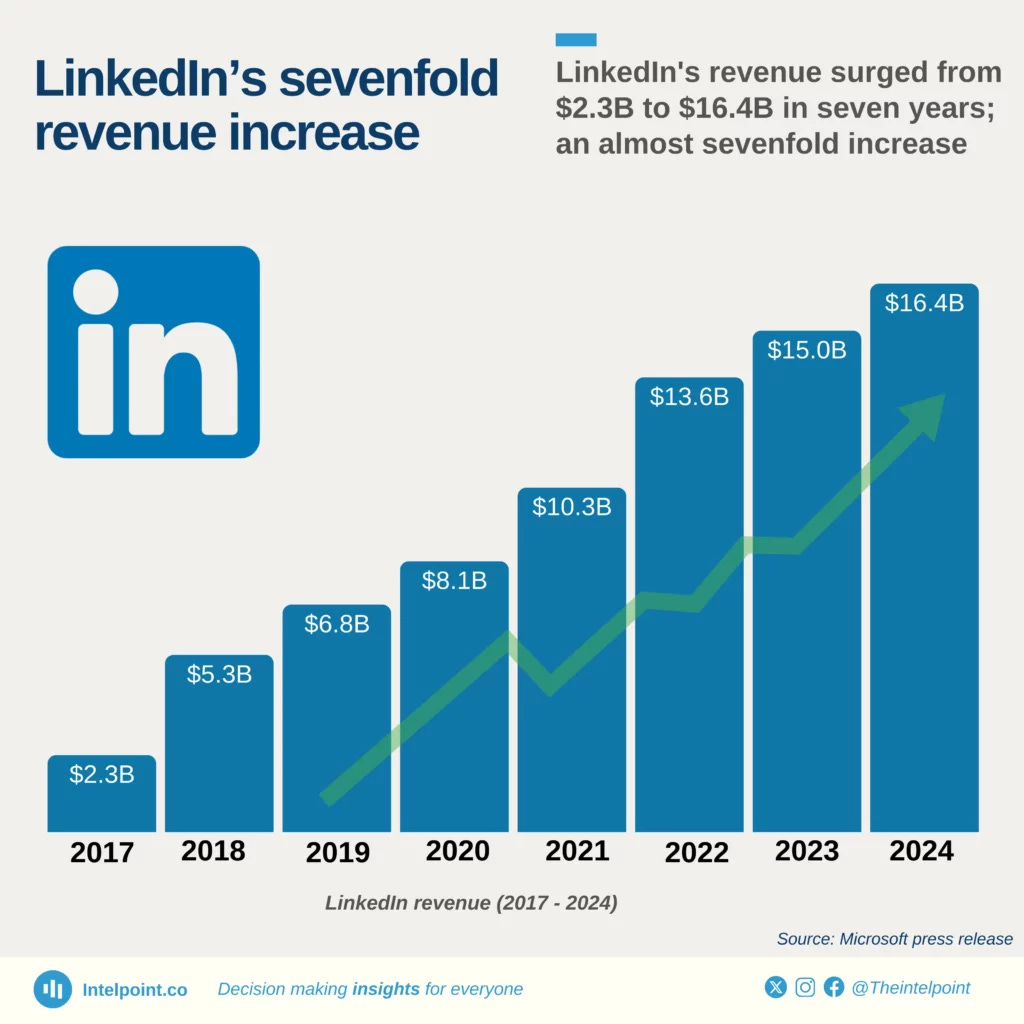
But that’s not just the end, LinkedIn’s numbers are so impressive, and show signs of potential. Here are a few of LinkedIn’s stats and numbers that I think position it as a potential powerful professional networking platform:
65 million LinkedIn users are decision-makers
54% of US LinkedIn users make over $100,000 annually
80% of B2B leads generated on social media come from LinkedIn
89% of users in B2B sales think LinkedIn is essential for closing deals
40% B2B marketers reported that LinkedIn is effective in driving high-quality leads
68% of B2B marketers have increased their use of LinkedIn in the past year
Over 9,000 members apply for jobs on LinkedIn every minute
7 people are hired every minute on LinkedIn (3 million new hires annually)
84% of B2B marketers believe LinkedIn delivers the best value compared to other platforms
82% of B2B buyers review LinkedIn profiles before accepting a meeting or making a connection
Damn! Crazy stats, right? When you look at the platform and the type of content it promotes, you tend to think that the platform is over. But looking at these numbers, it seems like LinkedIn is actually delivering real value to businesses, professionals, and anyone who plays the right game on the platform.
And this is why I think LinkedIn has still got a chance to become the next big, powerful social, professional networking platform, and potentially kill platforms like Twitter and Threads. And for good reason. Billions of people already use it. Almost all businesses have a LinkedIn presence. Data tells us that LinkedIn has huge potential. All it needs to do is make the platform worth using for everyone involved.
A Chance for LinkedIn
It’s clear to me that there’s no other platform like LinkedIn. Of course, the platform is broken right now. But guess what? It has got the user base, it has demand, and it has an ecosystem and tools that businesses and professionals depend on.
So, can LinkedIn become the next big thing?
Yes, but not easy. However, with meaningful right strategies LinkedIn could be the next big professional platform where not just the greatest conversations happen, but a platform that actually helps businesses find the best employees—and people, their next dream role, while making meaningful connections and relationships.
LinkedIn’s mission is audacious: “Connect the world’s professionals to make them more productive and successful.” But to actually achieve it, LinkedIn, in my opinion, needs to fix the following things that currently annoy most people who use the platform.
#1: Fix the Algorithm
No one likes LinkedIn’s algorithm as I’m writing this. It sucks. It doesn’t help with finding good content, it doesn’t help when you search for something on the platform, and it doesn’t help with finding relevant people and connections.
This must be changed.
When you search for something on the platform, the results should be relevant: right people, right communities, right posts, and right companies. When you follow someone or like a new post, it should show you relevant posts and accounts, not random things out of nowhere. The algorithm should be so smart that it learns from every tiny action and makes the user experience beyond imagination.
It will be incredible if LinkedIn could tie together a person’s profile to the type of content they create. If a mismatch is found, the creator should be penalized. This would be especially helpful if the person is giving business or financial advice. Rules, of course, must be applied but I think this will single-handedly increase the valuation creation.
#2: Remove the Cringeness
LinkedIn has always prioritized cringeworthy one-liners over quality, thoughtful content. But truth be told: no one likes to read the “show more” useless crap. They are usually cheap, low-effort content created to waste readers’ time. More often than not, one-liners turn out to be clickbait, engagement bait content.
This kind of content should absolutely be punished. And instead, LinkedIn should incentivize content that is thoughtful, genuine, and insightful that actually helps people learn and entertain. Any kind of behavior like “Comment YES if you agree” in the posts must be shadow-banned. And comments as well should be ranked based on their thoughtfulness, readers’ engagement, and replies, not just by the number of likes.
LinkedIn also needs to stop idealizing too much on humblebrags, hustle porn, lessons from everything, fake announcements, and fake vulnerable posts. One way LinkedIn can know about this is through scanning the comments of the post. Even though such content has become the norm on LinkedIn, if incentives are rightly aligned, people may slowly stop posting such content.
Temporary shadowban creators and users who consistently try to hack the algorithm by creating one-liner low effort content, or practices and publish AI-generated content. When LinkedIn’s users scroll the feed, they should be left feeling, “This was great, learned something new!” not “Damn, this platform sucks.”
#3: Get the Messages & Notifications Right
I’ve noticed that in recent years, LinkedIn’s messages and notifications have gotten out of hand. Countless promotional messages, irrelevant direct messages, useless notifications and alerts that users don’t want to see and engage with.
This is absolutely terrifying and makes the user experience worse. LinkedIn should give people more control over their accounts and what they want to read, see, and receive and what they don’t. This will single-handedly boost people’s productivity and give a far better user experience while using the platform.
#4: Redefine Networking
Networking on LinkedIn right now is about requesting “Connect”. But it doesn’t have to be that way. LinkedIn should learn from Twitter and Reddit, and try to implement similar things. Just like there are different small communities on Twitter (crypto, personal finance, trading etc.), and on Reddit, small local communities, topics, and open chats; LinkedIn can have similar small and large communities.
LinkedIn should give options to create communities and incentivize its users to join and run them. The reason crypto bros can’t leave Crypto Twitter is that all the other crypto bros are there, and the reason Reddit nerds don’t leave memes pages is that all the great memes are created and found earlier in those Subreddits.
What if LinkedIn’s communities are hard to ignore for professionals?
Now you may say: Doesn’t LinkedIn already have Groups? Well, you’re right. But what I’ve found is that they are not very useful. The people who create Groups do so intentionally: to share and sell their stuff. And more often than not, these groups are far away from personal conversations, genuinely helping each other, and having a good time chatting, like I see people on Subreddits do. This is the kind of community I’m talking about: value-driven, genuine, helpful, and a sense of connection.
#5: Stay True to the Core
It’s absolutely amazing that LinkedIn provides its creators and users with Creator Tools (posts, video, newsletter, carousel, etc.) that they need to succeed in their creator and business journey. And I know it’s important to publish their ideas in the creator economy. But don’t forget that this is not what LinkedIn was meant to be.
Content is a medium to connect people and businesses with each other, that’s it. LinkedIn’s primary goal is to help businesses find good employees, and people find their next dream job while making meaningful connections.
This is LinkedIn’s core value, and it should stick to it.
But LinkedIn, in recent years, has clearly made it painful for people to find jobs and for recruiters and businesses to hire the right employees. LinkedIn must be aware of it and make meaningful improvements so people don’t have a hard time finding jobs, and companies don’t have a hard time hiring the right employees.
By fixing them all, I think LinkedIn is set to become the next big professional, social networking and job board platform on the internet. The question however is: Does LinkedIn actually take time to think about these and implement them, or it’s busy changing the homepage and remains unchanged.
For now, LinkedIn is the best place for networking. Fake people exist everywhere,if you're authentic, they will notice you
LinkedIn users tend to try to outsmart everyone else and think they are the handful that are competent of doing the task(s)/job altogether. It's more of how Instagram has people showing off their lavish lifestyle, but the mirror won't reflect that to its audience ever. You can talk to better individuals to network such as your school alumni, communities you're interested, and more that align to these objectives, than just a whole bunch of wannabes and influencers.
Great article as always, keep it up!