
This is Design
Things You Should Know About Design

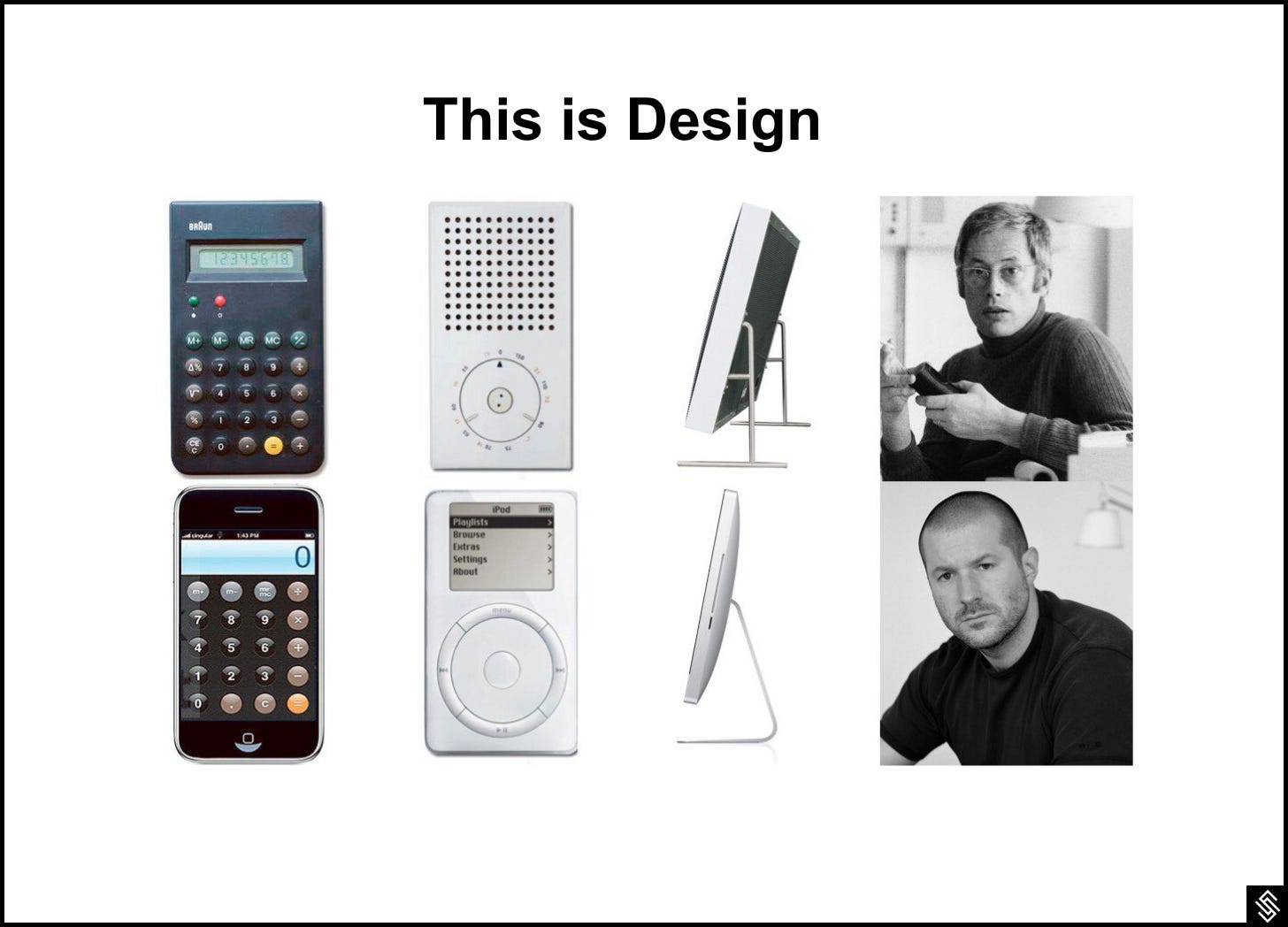
There’s been a debate happening a lot lately about whether becoming a “designer” in the age of AI is the right career path. The fear is real because design, in my opinion, is one of the industries massively reshaped by AI. Everyone now has access to the same AI tools, helping them design in two hours what used to take two weeks.
However, I think it’s worth noting that most people don’t actually understand what design really is. And when there’s a misunderstanding, one can take design for granted, indeed many do.
But design is a very broad term. What type of design am I really talking about? I should be very careful here. Being in tech, I’m primarily talking about product design. However, the things I’ll explain here can also apply to different kinds of design, for example interior or fashion design.
So the goal of this post is to help you understand what design actually is, how one can design masterfully, and most importantly we’ll discuss the future of design. If design is a crucial part of your work or business, I encourage you to give this a read.
Let’s dive in!
What is Design, Actually?
You may know that famous line Steve Jobs once said, “Design is not just what it looks and feels like, design is how it works.” And I think it truly is. Design should always be about how something works, not just how it looks and feels. One of the perfect examples of that Jobs’ quote would be this video from Apple. Just pay close attention:
Most people often misunderstand good design with mere aesthetics, decoration, adding a bunch of unnecessary elements, and product fanciness. That’s not a sign of good design. Designers who have skin in the game know good design is about product functionality, its purpose, user intent, ease of use, and often its simplicity.
As Dieter Rams wrote:
What is good design? Product design is the total configuration of a product: its form, colour, material and construction. The product must serve its intended purpose efficiently. A designer who wants to achieve good design must not regard himself as an artist who, according to taste and aesthetics, is merely dressing-up products with a lastminute garment. The designer must be the gestaltingenieur or creative engineer. They synthesise the completed product from the various elements that make up its design. Their work is largely rational, meaning that aesthetic decisions are justified by an understanding of the product’s purpose.
Nailed it! A product should chase its purpose: why it’s built for, who uses it, and how (simply) it works.
But, “you cannot understand good design if you do not understand people,” Rams said, “Design is made for people. It must be ergonomically correct, meaning it must harmonise with a human being’s strengths, dimensions, senses, and understanding.”
Put simply, you must understand human behavior to design something great.
One of the best examples of this would be Steve Jobs 2007 iPhone moment. “Design is how it works.” Keeping that in mind, Jobs walked onto a stage, pulled an iPhone out of his pocket, and revealed a tiny device that changed the world forever. That right there? That was a big design decision—removing the keyboard. Because again, design is not just how it looks and feels like, design is HOW IT WORKS.
And this means, designers should always focus on:
Functionality over aesthetic
User intent over decoration
Purpose over fancy elements
Simplicity over stylish animation
Another thing that I’d like to talk about is what Jony Ive likes to call “Carefulness Design”:
“I think the majority of our manufactured environment is characterized by carelessness…and we have genuinely tried to make products that don’t stand testament to those values, they stand testament to us desperately trying to make the very best product we can because we know someone like J.J. is going to sit down and stare at this screen. He will sense…he won’t be able to articulate it, but we hope that he will sense the care that went into it, and I do believe that we are capable of discerning far more than we are capable of articulating. – Jony Ive
Once you start designing stuff keeping these things in mind, the output won’t be the same again.
Design Masterfully
There are countless tactical tips on how to design well. One can learn all about pacing, repetition, shape, contrast, etc., anywhere online. But the following isn’t about that. Rather, I discuss the philosophical, more like framework/principles that guide the tactical design strategy—that’s what I’m going after here. These principles or wisdoms are not mine, rather they come from the greatest designers like Dieter Rams, Jony Ive, and entrepreneurs like Paul Graham.
Here are the design principles you should live by:
#1: Good Design is Innovative
“People only really learn when they’re surprised.” Derek Sivers writes, “If they’re not surprised, then what you told them just fits in with what they already know. No minds were changed. No new perspective. Just more information.”
I think this is also true for design. Good designs always tend to be innovative. But innovative doesn’t always mean original. One can reshape an old idea, tweak a bit, and make something completely distinctive that the world has never seen before.
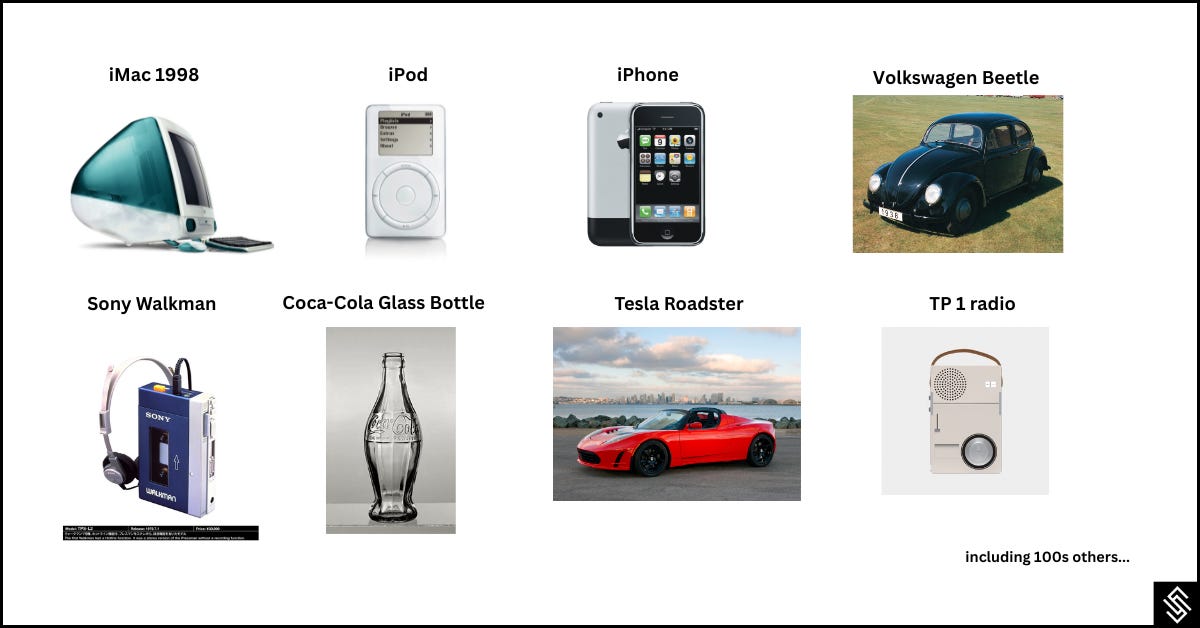
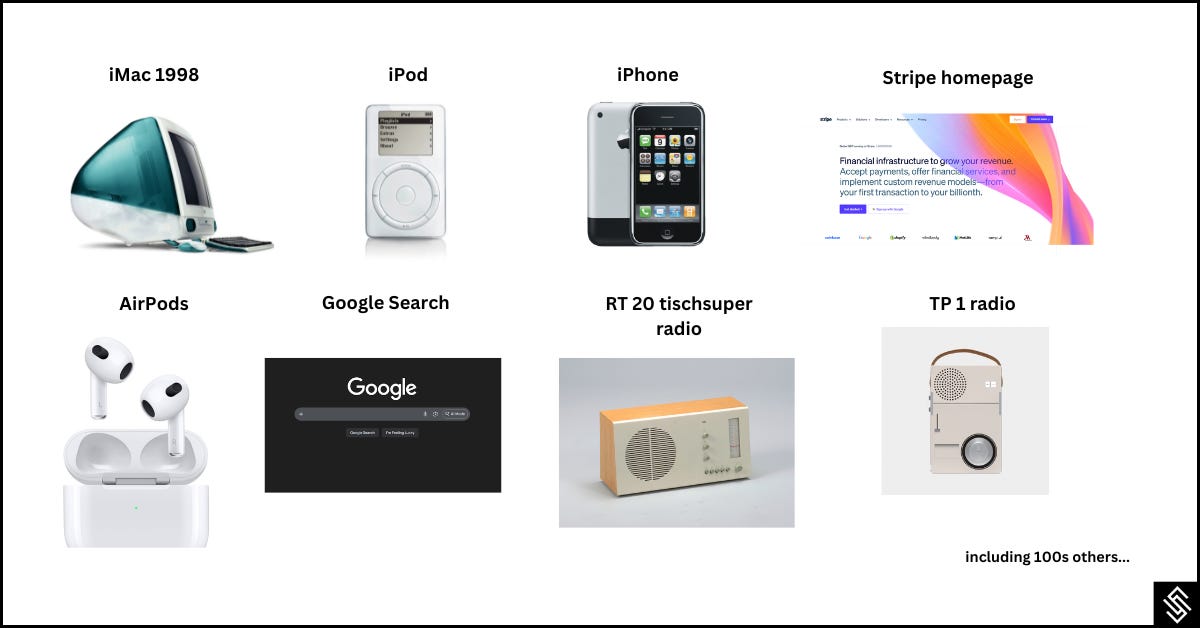
Good designs are not innovative because they surprise, they surprise that’s why they are innovative. This includes products like the Sony Walkman, iPhone, Tesla (2000s), TP 1 Radio, Volkswagen Beetle (1938), iPod, iMac, Coca-Cola Glass Bottle, and countless others.
Good designs are never experienced before—they are surprising, innovative.
#2: Good Design is Simple
Good design is often so simple. Paul Graham nailed it:
Good design is simple.
You hear this from math to painting. In math it means that a shorter proof tends to be a better one. Where axioms are concerned, especially, less is more. It means much the same thing in programming. For architects and designers it means that beauty should depend on a few carefully chosen structural elements rather than a profusion of superficial ornament. (Ornament is not in itself bad, only when it’s camouflage on insipid form.) Similarly, in painting, a still life of a few carefully observed and solidly modelled objects will tend to be more interesting than a stretch of flashy but mindlessly repetitive painting of, say, a lace collar. In writing it means: say what you mean and say it briefly.
It seems strange to have to emphasize simplicity. You’d think simple would be the default. Ornate is more work. But something seems to come over people when they try to be creative. Beginning writers adopt a pompous tone that doesn’t sound anything like the way they speak. Designers trying to be artistic resort to swooshes and curlicues. Painters discover that they’re expressionists. It’s all evasion. Underneath the long words or the “expressive” brush strokes, there is not much going on, and that’s frightening.
When you’re forced to be simple, you’re forced to face the real problem. When you can’t deliver ornament, you have to deliver substance.
Be it tools, websites, products—good design is simple.
#3: Good Design Solves the Right Problem
PG, again, has a perfect example for this:
The typical stove has four burners arranged in a square, and a dial to control each. How do you arrange the dials? The simplest answer is to put them in a row. But this is a simple answer to the wrong question. The dials are for humans to use, and if you put them in a row, the unlucky human will have to stop and think each time about which dial matches which burner. Better to arrange the dials in a square like the burners.
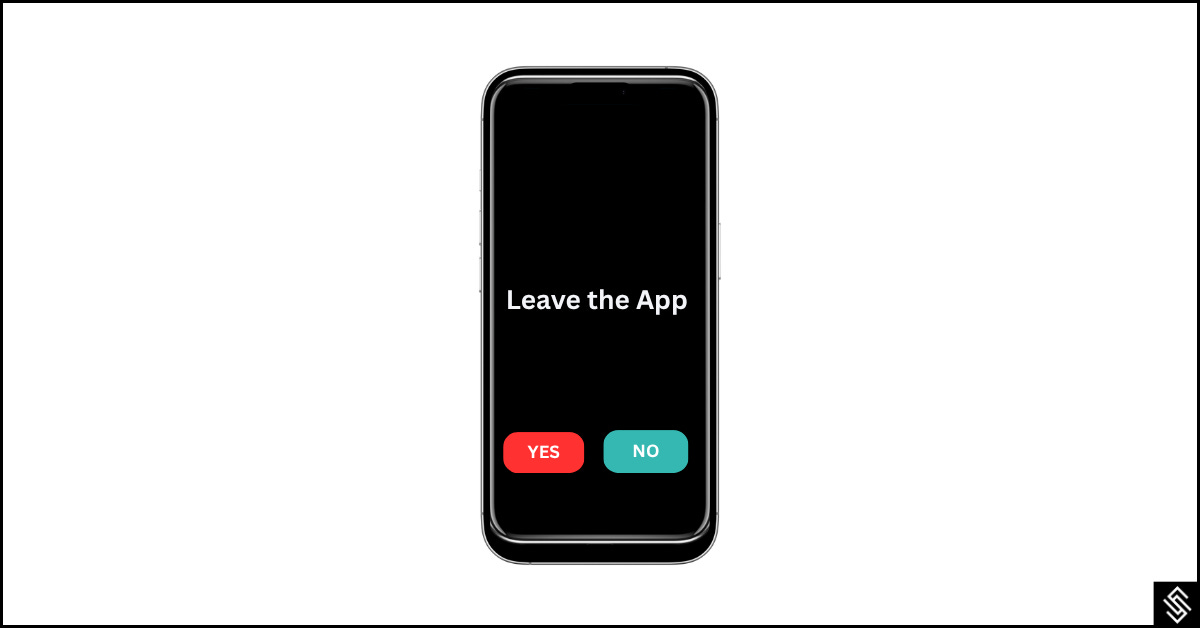
This is also why companies often place the most important CTAs, the button they want you to click on, at the right side of the screen, especially on mobile devices.
Leave the App: YES on the left, NO on the right side
Ready to publish: SAVE FOR LATER on the left, PUBLISH NOW on the right side
Enable 2f Authentication: REMIND ME LATER on the left, PROCEED on the right
You see this all the time. This is intentional—design solving the right problem.
#4: Good Design is Satisfying
Good design is satisfying. What do I mean by that? The design has failed to do its job if it doesn’t satisfy the user. Imagine building the most expensive, well-designed chair, but it’s too uncomfortable to sit on. The chair is useless, and so is the design in this case. Good design should satisfy the user and make the product usable for them.
This applies to both analog and digital design.
#5: Good Design is Not Subjective
“Design is not subjective because its primary purpose is to solve problems, communicate information, and achieve measurable goals” Google says, “rather than just express personal aesthetic. While art is subjective, design relies on objective principles like hierarchy, contrast, and user testing to ensure effectiveness.”
I agree with this.
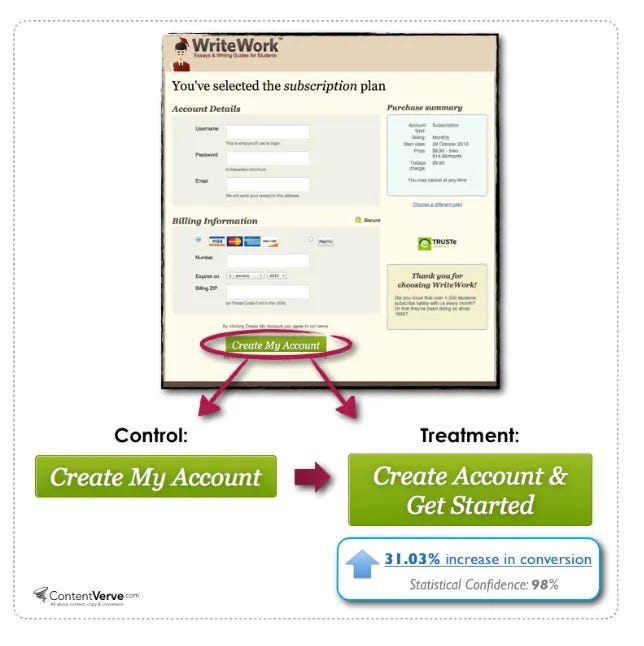
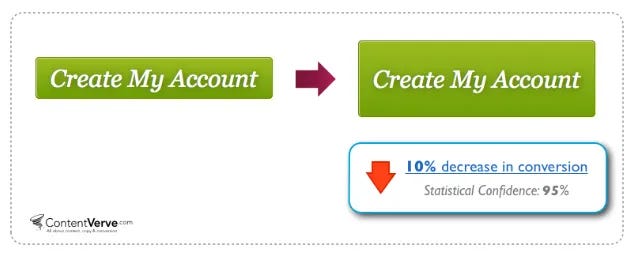
Design is not personal. Design is not art. It has to be validated—by data, by usability, by conversion rate, by purpose, by ease, and so on. For example, if making a button slightly bigger increases the conversion rate, then the question isn’t whether we should do it. Rather we have to. It’s not subjective. Because making a button bigger can almost always increase the conversion rate on any page. It’s objective.
For example, this one:
Or this one:
Future of Design
With the rise of AI tools, which now allow anyone to effectively design anything faster, better, cheaper, and more efficiently, designers are worried about their jobs, and inspiring designers are doubting whether they are making the right career decision.
AI design tools like Nano Banana, Google Stitch, Dall-E, Figma AI, Midjourney, and others are literally reshaping the way people design. Today, anyone with little to no experience can produce world-class designs. What used to take two weeks can now be designed in two hours, all thanks to these so-called design tools.
So what’s the future of design, are designers safe?
We’re seeing a paradigm shift in real time. Everyone has access to the same tools. So everyone is prototyping, shipping, and making things happen. From beginner designers to senior executives are designing without needing each other's feedback or help, thus a meme is going viral:
The role of a designer will shift from specialist—whether in UX, UI, or motion—to curator, someone who is assembling, adapting, and directing AI-generated work into great products. Most of the “craft” we think of as uniquely human will be automated, but creativity itself will expand, not shrink.
The gravitational pull is toward product builders, people who can think in systems, design with taste, and ship without waiting on someone else. Specialists will still exist, but mostly in very high-end, niche areas like motion, 3D, or brand. In startups especially, speed and adaptability will beat narrow expertise.
What is becoming less relevant as a designer are pixel-perfect wireframes as a deliverable, since AI is replacing the wireframe, weeks of UI exploration without shipping anything, and hand-off documentation between designers and engineers, as AI will automate much of that. - Felix Haas
You can’t just be a designer anymore. You must be able to do different jobs within your expertise. But above anything else, I think there are two things that’ll always matter (beyond design): Taste and Judgement.
Here’s how Dan explains the two:
Taste is the ability to evaluate quality. That might be knowing which design customers will love or which words will resonate most strongly. It is sometimes called discernment, craft, or product sense. When you study people with the very best taste, you hear one theme repeatedly: taste is not about adding things; it is about removing them. It’s an act of curation or editing.
As the volume of creative work explodes, we need people with great taste more than ever. The rise of vibe coding has led many companies to expect their designers to ship code. That’s great if it helps them prototype and edit faster, essentially acting as an accelerant for applying taste. But we should not turn designers into mini engineers. Because increasingly, code is cheap and taste is expensive.
In marketing, the ability to know what will resonate with an audience will resist AI. Generating many variations of creative, analyzing funnels, and running A/B tests will not. The best brand and product marketers will be standing long after the last performance marketers are gone.
Judgment is the ability to make good decisions under uncertainty. It is sometimes called strategic thinking, systems thinking, or prioritization. “The one thing that’s going to be truly future proof is judgment … In an era when you can do everything, the question is which of these things matter.” - Gokul Rajaram
Information is no longer the bottleneck: it’s easier than ever to know everything about how a business is performing, synthesize all of the feedback from customers, and see everything your competitors are doing. Judgment is the ability to parse all of that and decide what to do.
Investing is close to pure judgment because it presents the same information to everyone and requires them to make the right decision. Charlie Munger called it the act of “inversion” - conceptualizing the outcome you want and working back to today. That requires weighing all of the messy game theory, incentives, human irrationalities, and real-world constraints that will lead to the end result.
I think designers are safe as long as they are learning and evolving.
I loved this post!
Very well written post